
Best Photo Spots in Berlin
- Blue Crow Tours

- Jul 9
- 6 min read

A Photographer's Guide to Germany's Most Photogenic City
Berlin doesn't just have great photo spots. Berlin is a photo spot — every neighborhood, every era of history, every subculture has left a visual mark on the city.
From the Cold War geometry of the East Side Gallery to the wild post-industrial sprawl of Teufelsberg, Berlin rewards photographers who do their homework. This guide covers the essential locations — with honest advice on timing, crowds, and the kinds of shots you can realistically expect.
Why Berlin Is Exceptional for Photography
Most major European capitals have a clear visual identity: Paris has its golden limestone and iron filigree; Amsterdam has its canals and gabled facades. Berlin is harder to read, and that's precisely what makes it so interesting.
The city contains architectural layers from the Prussian Empire, the Third Reich, East German Communism, the chaos of reunification, and contemporary European urbanism — all compressed into a relatively walkable area. Add a thriving street art culture, some of Europe's most creative neighborhoods, and extraordinary light on clear days (particularly in autumn and winter), and you have a city that will fill memory cards fast.
The Iconic Shots: Central Berlin (Mitte)
Brandenburg Gate (Brandenburger Tor)
The most photographed landmark in Germany is the Brandenburg Gate — and for good reason. The neoclassical monument, built in the late 18th century, carries centuries of German history in its stonework. It's best photographed at dawn (before the crowds arrive) or at blue hour just after sunset, when the artificial lighting turns warm against a deepening sky.
From the east, you're shooting into Pariser Platz, which gives you a more architectural, contained composition. From the west, the gate frames the Tiergarten parkland behind it.
Photography tip: Come at 6am on a weekday. The plaza is nearly empty and the low-angle morning light is spectacular. By 9am, it's a different story.

The Reichstag and Government District
The Reichstag's glass dome — the work of architect Norman Foster — is one of the great architectural photographs in Europe. The interior spiral ramp reflected in the dome's mirrored cone creates powerful abstract compositions. Entry is free but must be booked in advance online.

The broader Government District along the Spree river offers some of the city's best modern architecture photography: the Paul-Löbe-Haus, Marie-Elisabeth Lüdes Haus and the Chancellor's Office (nicknamed "the washing machine" by Berliners), and the steel-and-glass Jakob-Kaiser-Haus.


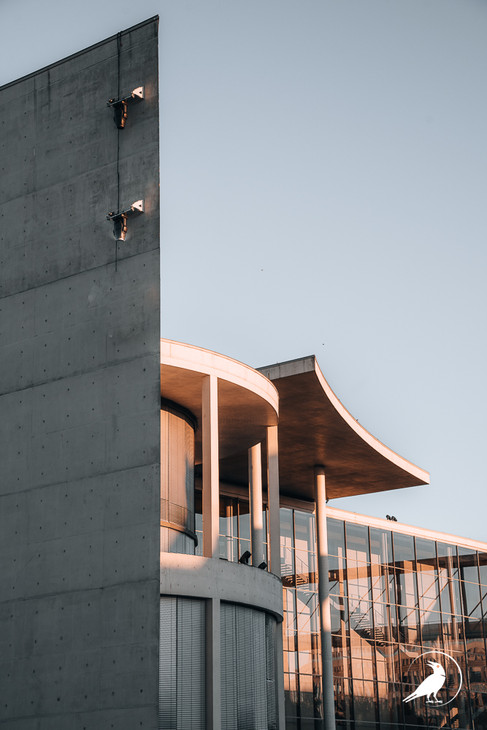
Photography tip: Visit the Marie-Elisabeth Lüdes Haus from the oppisite side of the Spree. Just sit on the stairs and wait for the light to hit the building in the early morning hours.
Museum Island (Museumsinsel)
The five museums of Museum Island sit on a narrow strip of land between two arms of the Spree river, creating an extraordinary setting. The Berlin Cathedral (Berliner Dom) — with its green copper dome — is the visual anchor.


Photograph the Cathedral head-on from the Lustgarten for classical symmetry, or follow the Vera-Brittain-Ufer pathway along the river's edge to include the Spree in the foreground.

Photography tip: The Humboldt Forum, directly opposite Museum Island, has free observation terraces on its upper floors with excellent views across to the Cathedral.
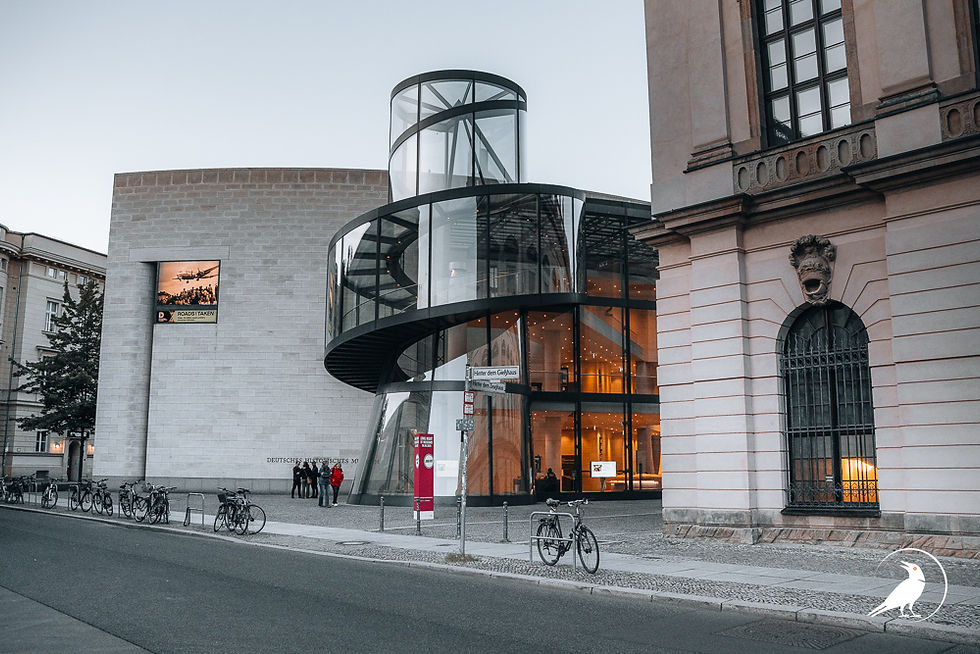
The Deutsches Historisches Museum has a fastcinating achitecture. Designed by the renowned Chinese-American architect I. M. Pei and opened in 2003, this striking glass-and-steel building features a signature transparent spiral staircase tower and stands adjacent to the historic Baroque Zeughaus(Armoury) building on Unter den Linden. Come in the evening hours, when the light is on in the foyer.
The Wall: History as Visual Subject
East Side Gallery
The longest remaining section of the Berlin Wall — 1.3 kilometers along the Spree in Friedrichshain — is covered in murals painted by artists from around the world in 1990, shortly after reunification. It's the world's largest open-air gallery and one of the most distinctive photography locations in Europe.
The murals are vivid, politically charged, and constantly being restored or repainted. Dmitri Vrubel's famous image of Brezhnev and Honecker kissing ("My God, Help Me to Survive This Deadly Love") is the most photographed, but explore the full length — there are extraordinary works in both directions.
Photography tip: Early mornings in spring and summer bring direct sunlight onto the gallery. In afternoon, you're shooting into the sun. Overcast days produce even, saturated colors with no harsh shadows.

Bernauer Strasse Memorial
The Berlin Wall Memorial on Bernauer Strasse is the only location where a complete section of the Wall — including the "death strip" between the two parallel barriers, watchtower, and barbed wire — has been preserved. It's a more sobering and historically rigorous experience than the East Side Gallery, and for documentary photography, it's unmatched.
Photography tip: The viewing tower at Bernauer Strasse gives an elevated perspective of the preserved strip below — valuable for conveying the scale and geometry of the border installation.
Fernsehturm
The commercial heart of former East Berlin centers on the iconic Fernsehturm (TV Tower) — at 368 meters, the tallest structure in Germany. The tower's sphere, reflecting sunlight as a luminous orb against blue skies, is instantly recognizable.
For a classic composition, include the Urania Weltzeituhr (World Time Clock) in the foreground with the tower behind. For a longer exposure at night, the surrounding trams and traffic create strong light trails.
If you are looking for a different perspective, wander off into the side streets and catch a photo of the Fernsehturm not everyone has.

Märkisches Museum Station
Opened in 1913 and designed by architect Alfred Grenander, this U2 station sits an unusual six meters below street level — deep enough for a wide, columnless vaulted hall that's often compared to the Paris Métro. It's one of only two stations in Berlin built this way.
The walls are the real subject: twelve mosaic maps tracing Berlin's history from 1237 to 1987, paired with reliefs that shift style from Renaissance to socialist realism. Add Grenander's signature green tiles and oval station signs, and the platform feels like a history lesson you can walk through.
Photography tip: Shoot wide-angle from track level to capture the curve of the vault. A slower shutter (1/15s–1/30s) as a train passes adds motion blur and drama — brace against a bench or pillar since a tripod isn't practical here.
Hidden Gems and Off the Beaten Path
Teufelsberg
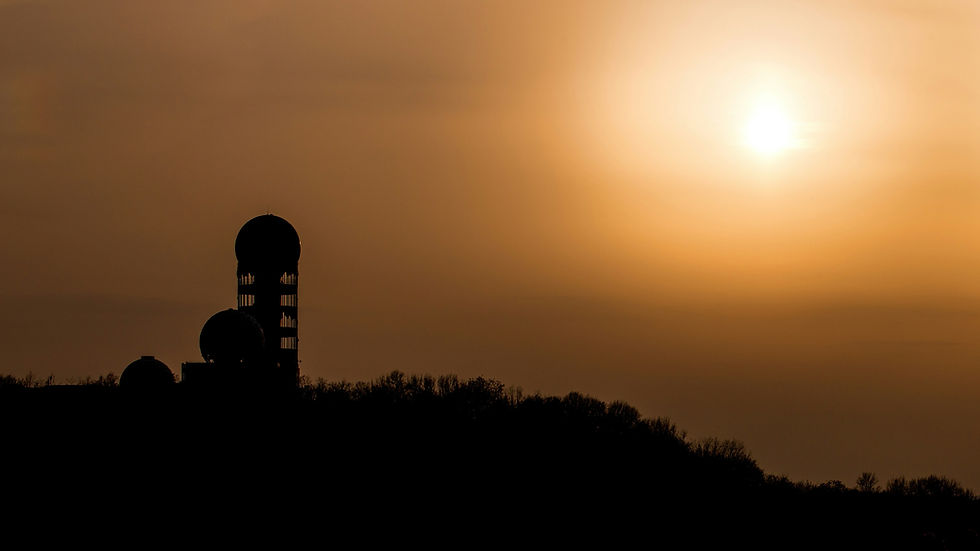
Built on a hill of rubble from World War II demolition, Teufelsberg ("Devil's Mountain") hosts the ruins of a Cold War-era NSA listening station, now covered in graffiti and street art. The location offers panoramic views of Berlin from its towers — unusual elevated perspectives rarely seen in travel photography guides.
It is privately managed and charges a small entry fee. Tours are available.
Photography tip: Visit in late afternoon for golden light on the graffiti and long shadows from the antenna towers.
Oberbaumbrücke
The twin-towered red-brick bridge connecting Friedrichshain and Kreuzberg is the most photogenic bridge in Berlin. The yellow U-Bahn trains crossing overhead are the signature element — patience pays off here.
Photography tip: Position yourself on the riverbank just west of the bridge, facing east toward the setting sun. Wait for a train. The combination of red brick, yellow train, and warm light is one of Berlin's classic shots. Get a long-exposure shot going to blur out the motion of the train.

Berlin's Backstreets
Berlin's counterculture, immigrant communities, and art scenes have overlapped for decades. It's messy, layered, and visually extraordinary — murals on every second building, Turkish markets, canal-side cafés. It rewards slow, exploratory photography without a specific agenda.


Photography Practicalities in Berlin
Crowds: The major landmarks — Brandenburg Gate, East Side Gallery, Checkpoint Charlie — are extremely crowded from May through September. If you want clean shots, either arrive before 8am or embrace the people as part of the composition. Autumn and winter give you more space and better light angles.
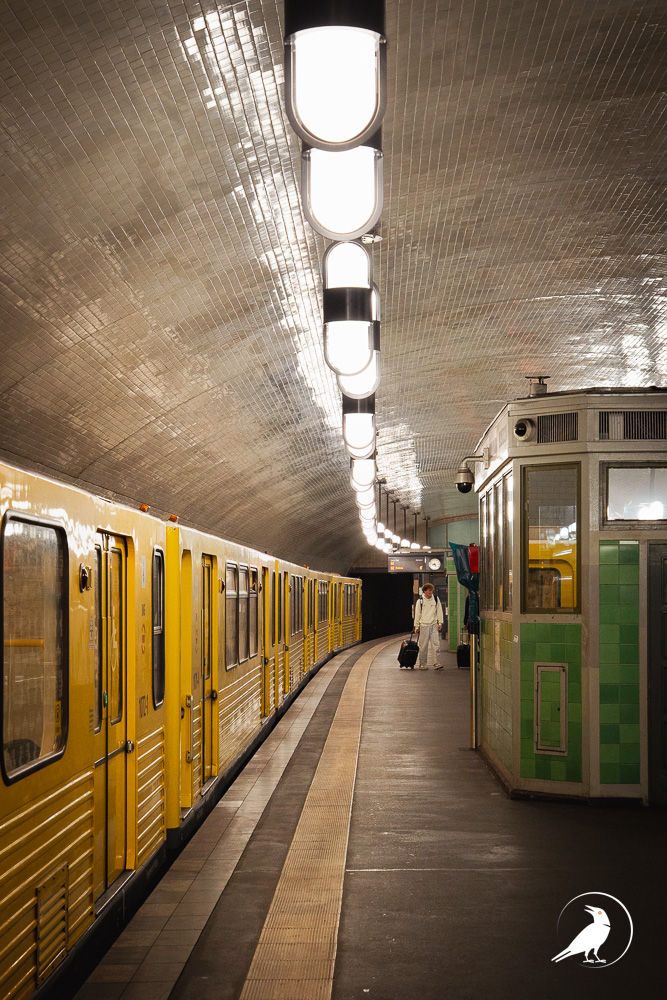
Transport: Berlin's public transit (U-Bahn, S-Bahn, trams, buses) is excellent. A day pass is worth it — most photo locations are spread across the city rather than concentrated in one walkable area. Also, many Berlin subway stations are a photo opportunities in its own: This one is Heidelberger Platz.


Weather: Clear days in autumn and winter offer crisp, contrasty light and more dramatic skies than the flat summer haze. The Festival of Lights (Festival of Lights) in October transforms major landmarks with large-scale light projections — a dedicated photography event worth planning around.
Indoor photography: Most museums and churches permit non-flash photography for personal use. Some require a small photo permit fee. The Reichstag dome is a notable exception — photography is freely permitted.
Plan Your Visit Virtually First
Berlin rewards photographers who arrive with a plan. Knowing which direction a street runs (and therefore when it catches the best light), how wide the East Side Gallery actually is, or what the view from Teufelsberg's towers actually encompasses — this preparation changes what you bring and how you spend your limited time.
Quick Reference: Berlin Photo Spots by Type
Category | Locations |
Iconic landmarks | Brandenburg Gate, Reichstag, TV Tower |
Wall & Cold War history | East Side Gallery, Bernauer Strasse, Checkpoint Charlie |
Architecture | Karl-Marx-Allee, Museum Island, Government District |
Street photography | Kreuzberg, Alexanderplatz, Friedrichshain backstreets |
Urban exploration | Teufelsberg, RAW-Gelände |
Bridges & waterways | Oberbaumbrücke, Landwehr Canal, Spree riverbank |
Transit photography | Ostkreuz, Berlin Hauptbahnhof |
Have fun expoloring Berlin and tag us on your photos (@bluecrowtours on Instagram). We'd love to see your interpration of this vibrant city.
Blue Crow Tours offers pre-recorded virtual photo tours key photography locations, helping you plan your itinerary, understand the light, and arrive ready to shoot.

Comments